Pickleball Tips: Every Shot, Plus 15 Quick Tips
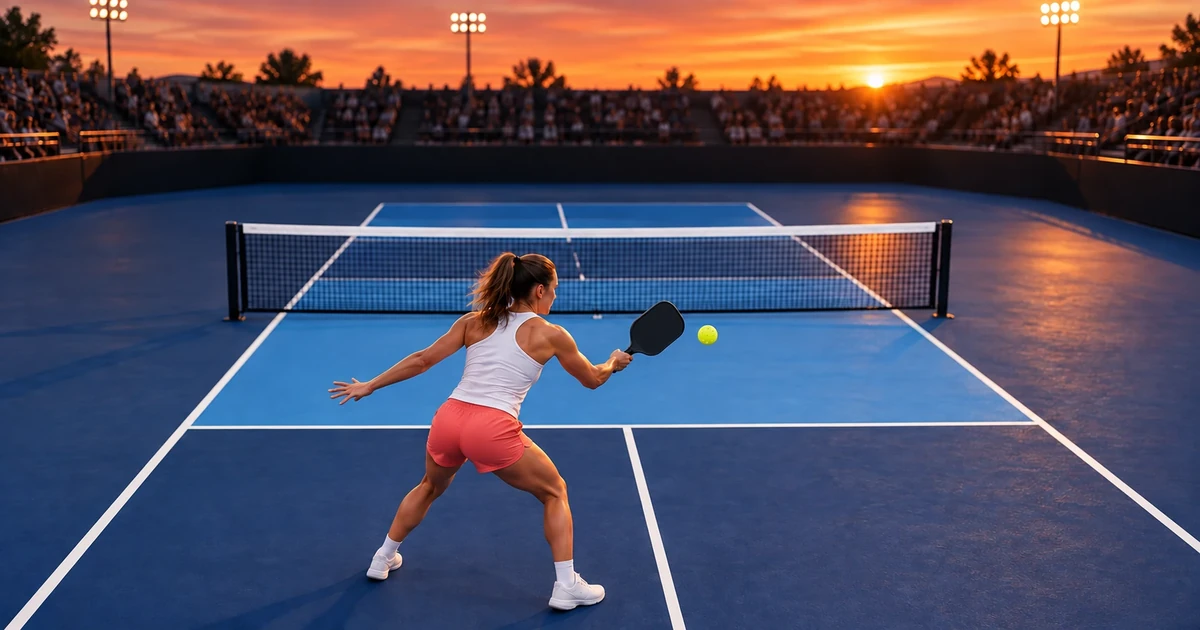
Pickleball tips start with the shots: serve, return, third-shot drop, dink, reset, drive, volley, lob and overhead. The table below says when to use each, where it should go and where to learn it, then 15 one-line tips follow. These are coaching habits, not rules. A rule number appears wherever a rule applies.
Every pickleball shot in one table
No rulebook ranks shots, so the table follows the order they come up in a rally. The full rules are on the rules page.
| Shot | When to use it | Where it should go | Rule that applies | Learn it |
|---|---|---|---|---|
| Serve | Starts every rally | Diagonally, past the kitchen line, into the service court | Volley serve (7.C) or drop serve (7.D). It must clear the kitchen and land in the correct court (7.E) | How to serve |
| Return | After the serve bounces | Deep | The serve must bounce before you hit it (10.A.1) | Doubles strategy, singles strategy |
| Third-shot drop | The serving team's first shot after the return bounces, when the return is low or you are pushed back | Soft, into the far kitchen, a 7 by 20 ft target 22 to 29 ft from your baseline | The return must bounce before you hit it (10.A.2) | Third shot drop |
| Third-shot drive | Same moment, when the bounce is high and you have time | Flat and fast toward the receivers | Same (10.A.2) | Third shot drop (drop or drive) |
| Dink | At the kitchen line, ball low | Soft, into the opponent's kitchen | A dink that bounced in the kitchen may be hit from inside it. A volleyed ball may not (11.A) | What a dink is, dinking drills |
| Reset | You are pushed back, or a hard ball comes at your feet | Soft, into the kitchen | None | The reset shot |
| Volley | A ball before it bounces, from outside the kitchen | Open space or the opponent's feet | Start it outside the kitchen. No momentum into it (11.A, 11.A.2) | The volley |
| Lob | To move a net player back | Over their head and deep. The window is 15 ft | None. "Lob" is not a rulebook word | Lob section below |
| Overhead | A lob that stays in the air | Down, away from the defenders | Same as any volley (11.A) | Lob section below |
| Backhand | Any ball on your non-paddle side | Same targets as the forehand | A serve may be a forehand or a backhand (7.C.4, 7.D.5) | Backhand section below |
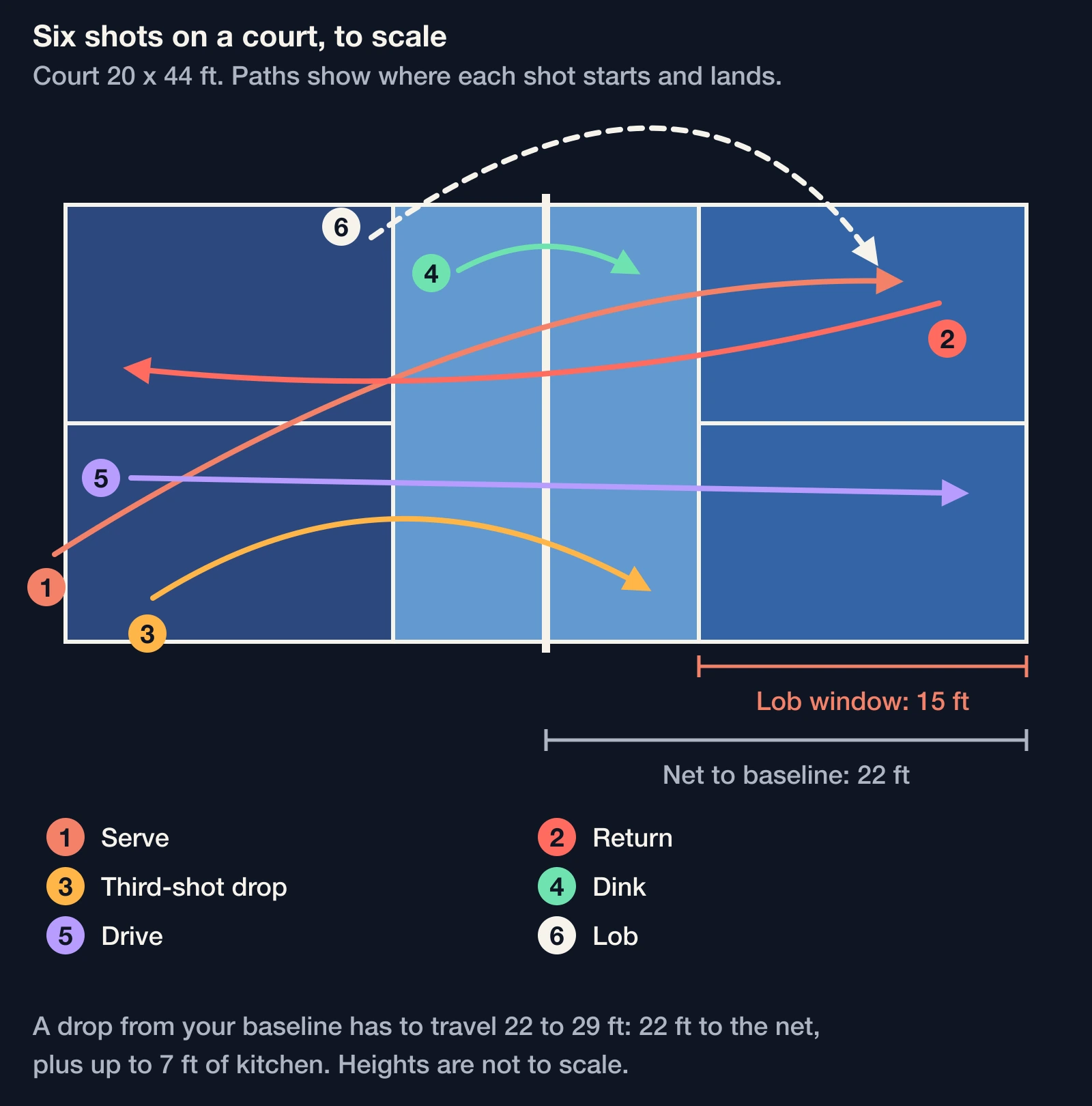
The shots on a court, to scale
The court is 20 by 44 feet, the net is 22 feet from each baseline, and the kitchen is 7 feet deep. A lob from the kitchen line has 15 feet to land in. A drop from your baseline travels 22 to 29 feet.
15 pickleball tips, each with the page that teaches it
All tips except 2, 9 and 10 are coaching advice, not rules. Each page names its source.
- Serve deep and keep it in. A fault ends your serve. How to serve
- Let the serve and the return bounce, every time (10.A). The two-bounce rule
- Return deep, then walk to the kitchen line while your partner holds it. Doubles strategy
- Drop the third shot when the return is low. Drive it when the bounce is high. Third shot drop
- Keep dinks low and soft, and wait for a ball you can attack. What a dink is
- When you are pushed back, reset: hit it soft into the kitchen. The reset shot
- Keep your paddle up in front of your body. Ready position and footwork
- Volley with a short block, not a big backswing. The volley
- Don't volley from inside the kitchen (11.A). Kitchen rules
- After a volley, stop before the line. Momentum into the kitchen is a fault (11.A.2). Can you step in the kitchen
- Brush up the back of the ball when you're set, so it dips into the court. Skip it when you're off balance. Topspin
- Hold the paddle with a relaxed grip. How to hold the paddle
- In doubles, move up together and stay level, so no gap opens between you. Doubles strategy
- Warm up before you play. A 6-minute warm-up
- No court? Hit against a wall. Wall drills
Backhand: one hand or two
Which backhand is better, one hand or two? The coaches who write about it call it a personal choice. TopspinPro (updated 22 June 2026) says two hands give more power and stability, one hand gives more reach, and the best players use both. Pickleball Union credits the two-hander with greater stability, mainly on high balls and when generating topspin, and the one-hander with greater reach on wide balls.
Our 10-ball check: a partner feeds ten slow balls to your backhand. Seven in the court is a pass. A serve may be hit forehand or backhand (7.C.4, 7.D.5). The grip is on how to hold a paddle.
Lob and overhead: use depth, not height
A pickleball lob is a high shot over the head of the player at the net. Against someone at the kitchen line it has 15 feet to land in (22 feet from net to baseline, minus the 7-foot kitchen), so depth matters. The overhead is the volley you hit at a lob that stays in the air.
No rule bans a lob, and the rulebook doesn't use the word. An overhead is a volley, so it must be hit from outside the kitchen. Momentum into the kitchen afterward is a fault, even after the ball is dead (11.A, 11.A.2).
Should you let a deep lob bounce? No rule decides it. USA Pickleball's lob page says to play the lob in the air if possible, because a bounce gives up the overhead smash and lets the other team move up. It makes exceptions for a lob you lose in the sun, don't have time to get under, or think may bounce out. See the volley and the dink.
What to do with these tips
Pick one tip per game. For practice, see the drills. For what to do on court as a pair, read pickleball strategy. For a week-by-week plan, try how to get better.
Next game, pick the shot that lost you the most points and read its page. Then try the 10-ball backhand check, or hit 10 lobs at a 15 foot target. The free game is singles or doubles against the computer at three levels, with keyboard and mouse.
Sources
- 2026 USA Pickleball Official Rulebook: Rules 7.C to 7.E (serves), 10.A.1 and 10.A.2 (two bounces), 11.A and 11.A.2 (the kitchen and momentum).
- USA Pickleball, Pickleball Lob Shots: play the lob in the air if possible, with exceptions; the 15 feet from the kitchen line to the baseline.
- TopspinPro, The pickleball backhand: one hand or two (updated 22 June 2026): two hands for power and stability, one hand for reach.
- Pickleball Union, Do you need a two-hand backhand?: stability of two hands, reach of one.