Pickleball Double Bounce vs Two-Bounce Rule
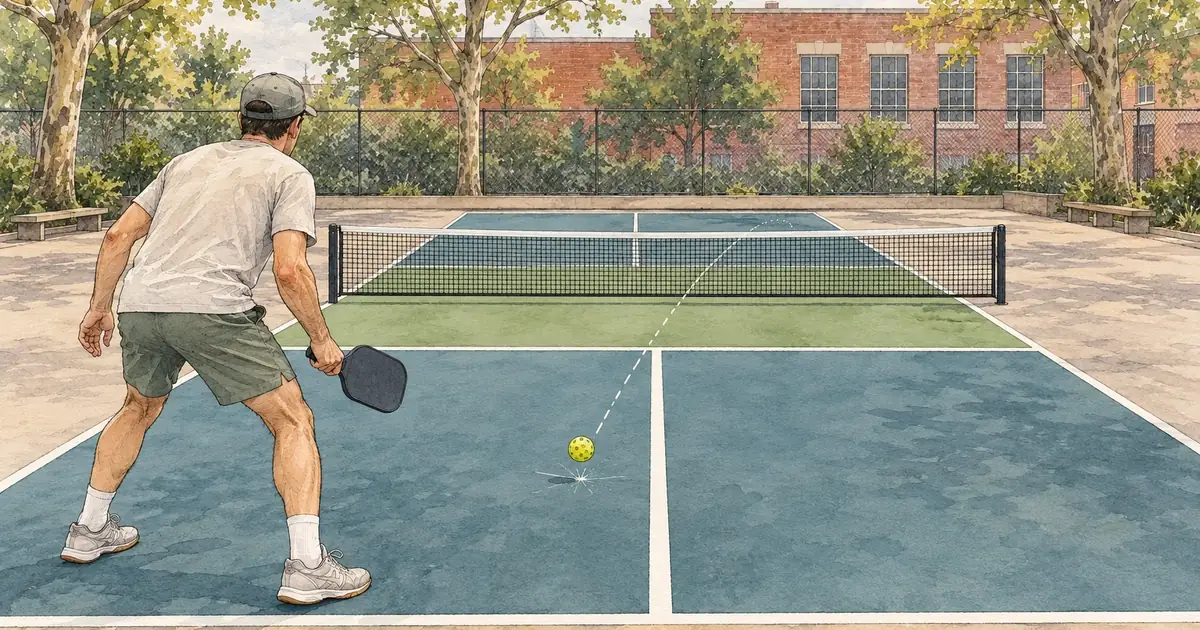
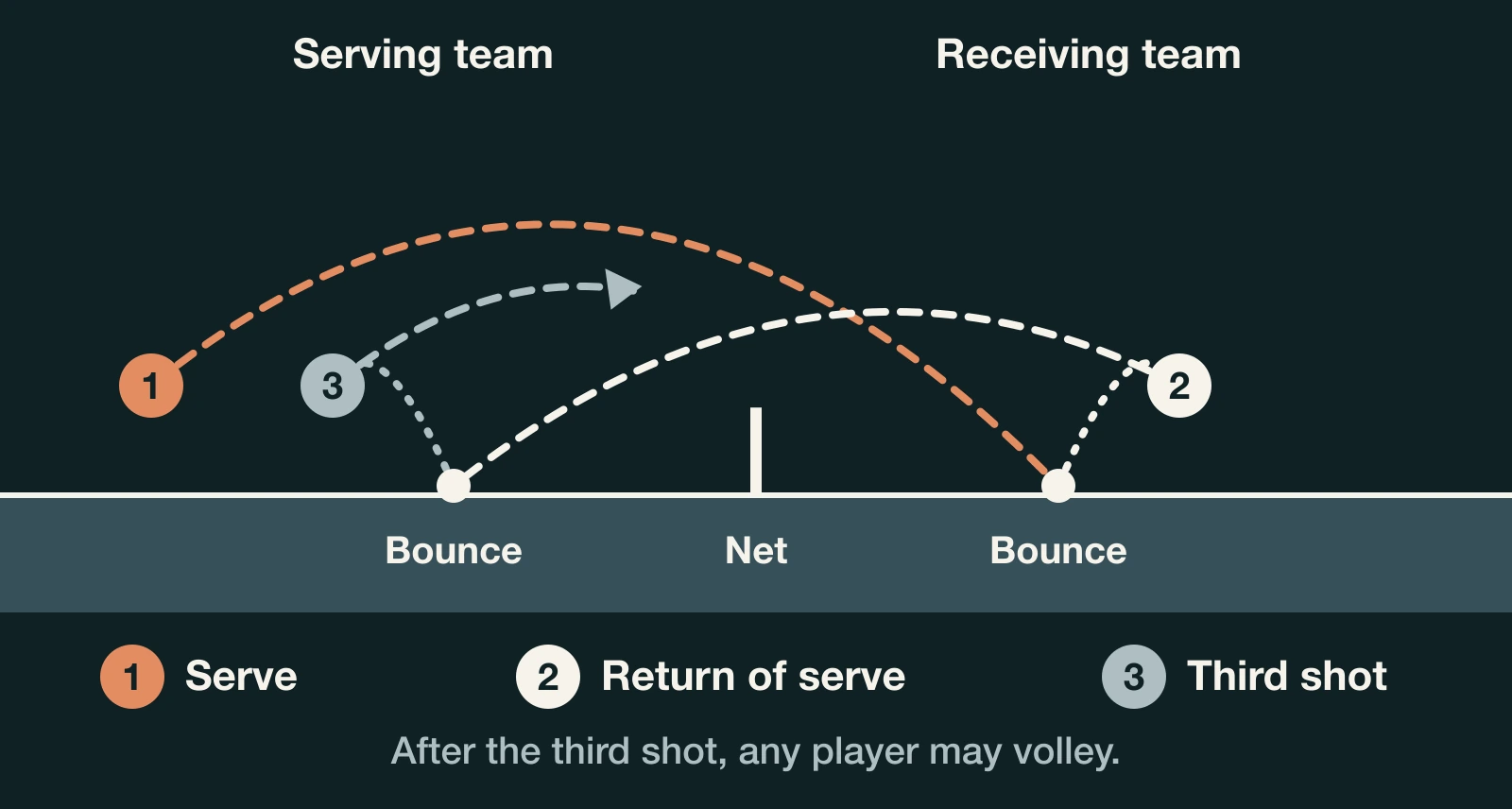
The two-bounce rule says the serve and the return of serve must each bounce before anyone hits them. After those two bounces, players can volley. A double bounce is something else: it's a fault when the ball bounces twice on your side before you return it.
The two names get swapped a lot. The rulebook treats them as two separate rules (Rules 10.A and 10.B in the 2026 USA Pickleball rulebook).
What is the two-bounce rule in pickleball?
- The server hits the serve. The receiver has to let it bounce before hitting it back.
- The receiver's return crosses the net. The serving team has to let it bounce before hitting it.
- The serving team hits the return after its bounce. That's the third shot. After it, either team can volley.
So the ball bounces once on each side at the start of every rally, and then it's open. The rule applies in singles and doubles, and it starts over after every serve. For where volleys are legal once the two bounces are done, see what counts as a volley.
Break it and it's a fault. A receiver who hits the serve out of the air is at fault. A server, or a server's partner, who volleys the return before it bounces is at fault too. Both cases sit in the table of every pickleball fault, with who loses the rally.
What is a double bounce in pickleball?
Here the problem is the opposite. At any point in a rally, you have to hit the ball before it bounces a second time on your side. Let it bounce twice and you lose the rally (Rule 10.B).
You'll hear this one called the double bounce rule, and it's the reason players scramble to get to a ball before the second bounce. It applies at any point in the rally, not only at the start.
Why does the two-bounce rule exist?
It stops the serving team from serving and then volleying the return at the net. The receiving team gets time to hit a decent return and settle into the point. The rulebook lists it as one of the sport's unique features, along with the kitchen.
It's also why the third shot gets a name of its own. That's the serving team's first hit, and it has to come after a bounce. How to hit it, and when to drive instead, is in the third shot drop guide.
Where do players get caught?
- The server's partner at the net. In doubles, the server's partner is on the serving team and can't volley the return of serve either. Standing at the kitchen line doesn't change that. The doubles rules cover where each partner stands.
- The wrong receiver. Only the correct receiver may hit the serve. Their partner can't step in and take it.
- Forgetting after a side out. Every new serve restarts the rule, including the first serve after the other team takes over.
- Mixing it up with the kitchen. Once the two bounces are done, volleys are allowed, but you still can't volley from inside the kitchen. See the kitchen rules.
One exception exists. Players using wheelchairs and some adaptive players are allowed to let the ball bounce twice before they return it. The first bounce has to be in the court, and the second can be anywhere.
Does a ball that bounces in the kitchen count as the bounce?
Yes. If the return lands in the kitchen on the serving team's side, that is its bounce. The serving team can step in and hit it after it has bounced, because the kitchen only bans volleys. A soft shot hit into the kitchen on purpose, after a bounce, is a dink. The two bounces also set the pace of a doubles point: see doubles strategy. See the kitchen rules.
A counting habit that works
Say "bounce" out loud when the serve lands and "bounce" again when the return lands on the other side. After the second bounce, hit the third shot, and from there the ball is open to volleys. After a few games the count runs in your head, and you stop volleying the return by reflex.
With a partner, practice just the opening three shots: serve, return, third shot. Check that the ball bounced before the return and again before the third shot, then let the rally go free.
The serving rules explain how to start the rally correctly. If you want the sequence to sink in, play a few points in Pickleball Game, a pickleball video game where the referee calls a fault when the serve or return is hit out of the air. The rules page has a short diagram of the same thing.