What Is a Volley in Pickleball? Rules and Types
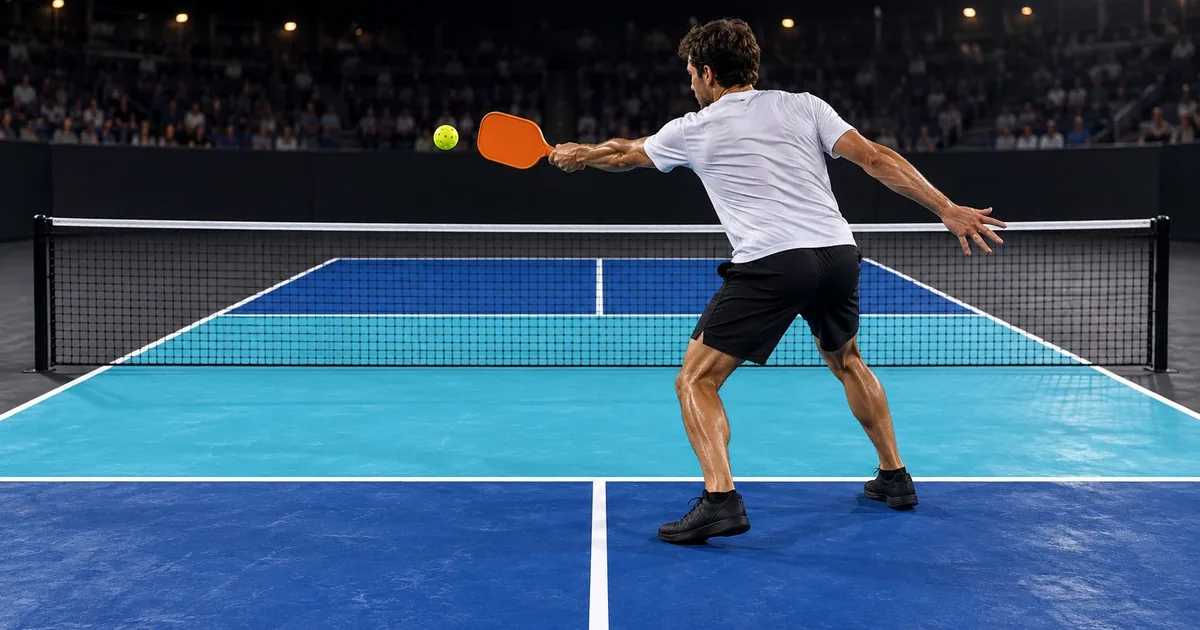
A volley in pickleball is any shot you hit before the ball bounces. It's legal anywhere on the court except from inside the kitchen. The one other limit is the start of the rally: the receiver can't volley the serve, and the serving side can't volley the return (Rules 10.A and 11.A). A ball hit after a bounce isn't a volley, even when you play it from inside the kitchen.
The rules page covers the rest of the game. This page is the vocabulary: what the rulebook counts as a volley, and what it doesn't.
What counts as a volley?
The 2026 USA Pickleball rulebook defines a volley as a strike of the ball before the ball bounces. That's the whole test.
The "act of volleying" is longer than the contact. It begins when you hit the ball out of the air and ends when the movement from your follow-through stops. So if you volley and your momentum carries you into the kitchen, it's a fault even after the ball is dead (Rule 11.A.2). The kitchen article walks through it.
USA Pickleball's glossary adds how it's usually hit: a blocking motion with no backswing and the paddle face square to the net. USA Pickleball's volley tips say most volleys happen at the kitchen line and name two types, the soft block and the punch volley.
"Volley serve" uses the word differently. It's a serve hit before the ball bounces, one of the legal serve motions (Rule 7.C). The serving rules cover it.
Volley, half volley or bounced ball?
One thing decides it: had the ball bounced when you hit it?
| When you hit it | Common name | A volley? |
|---|---|---|
| Before the ball has bounced | Volley | Yes |
| Right after the bounce, before the ball rises | Half volley | No |
| After the ball has bounced and risen | Groundstroke | No |
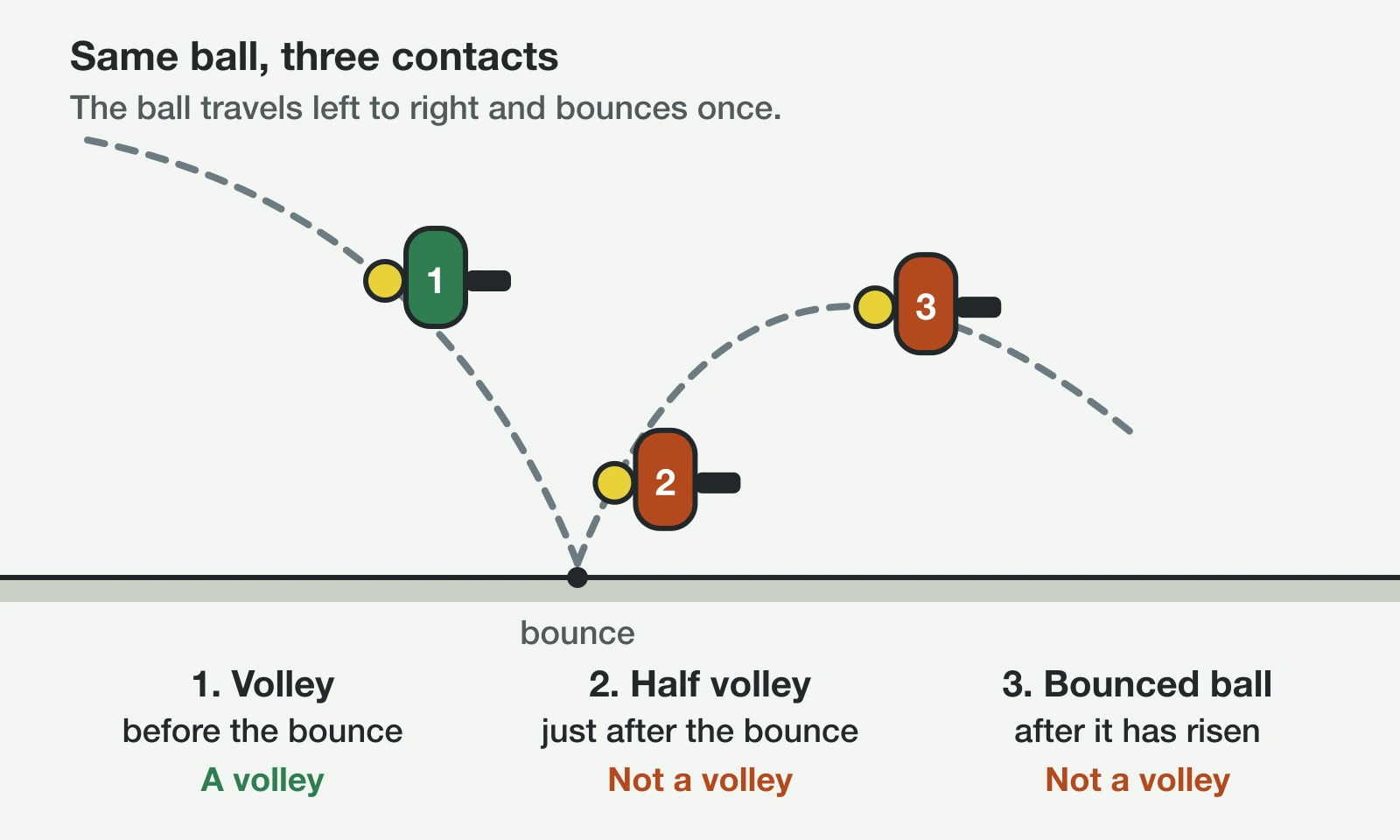
The rulebook has no entry for "half volley" or "groundstroke". The coaching page of the facility Pickleland describes a half volley as a ball hit immediately after it bounces, before it rises. By the rulebook's definition, that ball has bounced, so it isn't a volley. That's our reading of the definition, not a separate rule.
Rally is a different word again. The rulebook defines a rally as the continuous play after the serve is hit and before the ball is dead. A rally is the whole exchange. A volley is one shot in it.
Where can you volley?
Almost everywhere. One line per case:
| Situation | Can you volley? | Rule |
|---|---|---|
| Receiver, on the serve | No. It must bounce first. | 10.A.1 |
| Serving side, on the return of serve | No. It must bounce first. | 10.A.2 |
| From outside the kitchen, once both bounces are done | Yes | 11.A |
| With a foot, your paddle or anything you carry touching the kitchen or its line | No | 11.A.1, 3.A.4.c |
| Reaching over the kitchen without touching it | Yes. The zone has no height. | 3.A.4.c |
| A ball that has already bounced, hit from inside the kitchen | Allowed, and it isn't a volley | 11.A |
| The next volley after stepping into the kitchen, before both feet are fully outside | No | 11.A.3 |
The double-bounce rule explains the first two rows. The kitchen article explains the rest. One more legal spot is outside the sideline beside the kitchen, where a volley is called an erne. What an erne is covers where you may land.
Is a soft volley a dink?
No. By the glossary a dink is hit on a bounce from the kitchen area. A soft shot hit out of the air from behind the line is a soft volley. If the ball is below the net and coming fast, the soft shot you want is a reset. The dink article has the full comparison.
Check yourself: air or bounce?
Have a partner feed you ten balls near the net. Before each hit, say "air" or "bounce" out loud, then see if you were right. Ten for ten is a good pass mark. That's our suggestion, not an official standard.
Pickleball Game's referee calls a kitchen fault if you volley with a foot in the zone, so you can also practice in a free game against the computer. The video game page has the details, and the terms glossary covers more court words. For every shot in one table, with when to hit it and where it goes, see the pickleball tips page.