Pickleball Serving Rules and Faults (2026)
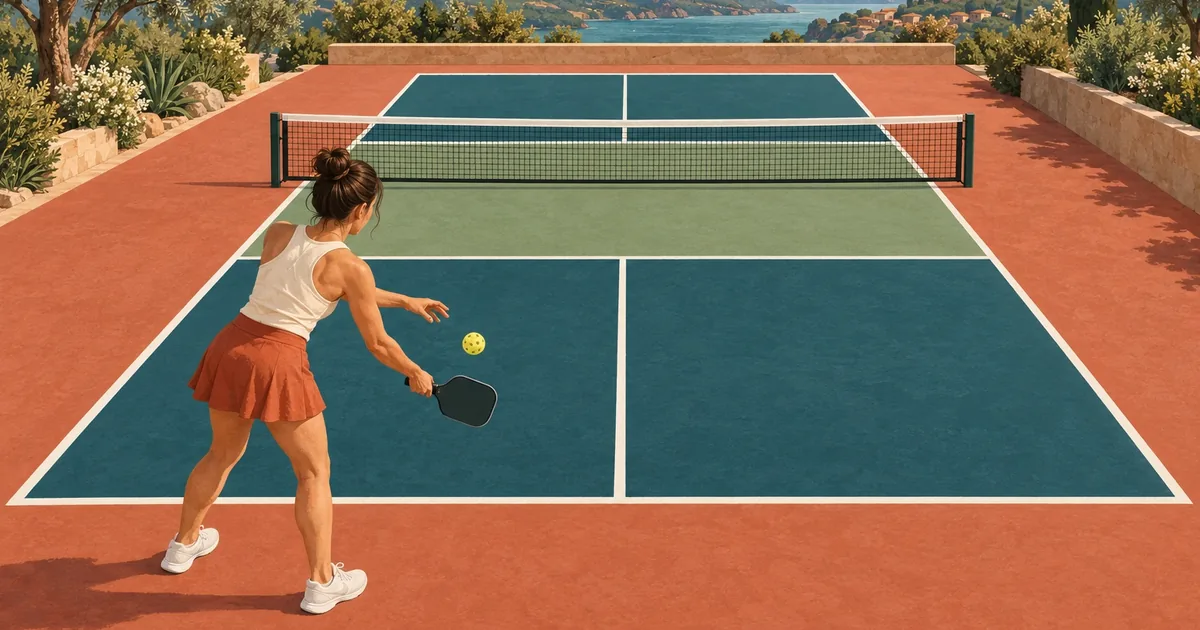
A legal pickleball serve is hit with an upward swing with the ball no higher than your waist, or after you drop the ball and let it bounce. It goes diagonally across the net, clears the kitchen, and lands in the service box on the far side. You get one try. If the serve breaks a rule, it's a fault and you lose the rally.
The serving rules cover three things: your feet, your swing and where the ball lands. This page follows the 2026 USA Pickleball rulebook.
The five serving rules in short
- Call the score first, then serve within 10 seconds.
- Stand behind the baseline with at least one foot on the ground and no foot on the line.
- Serve with a volley serve (upward swing, below the waist) or a drop serve (let it bounce first).
- Serve diagonally, over the kitchen, into the correct service box.
- You get one attempt. Any fault ends the serve.
The rest of this page takes each one in turn.
Where do you stand to serve?
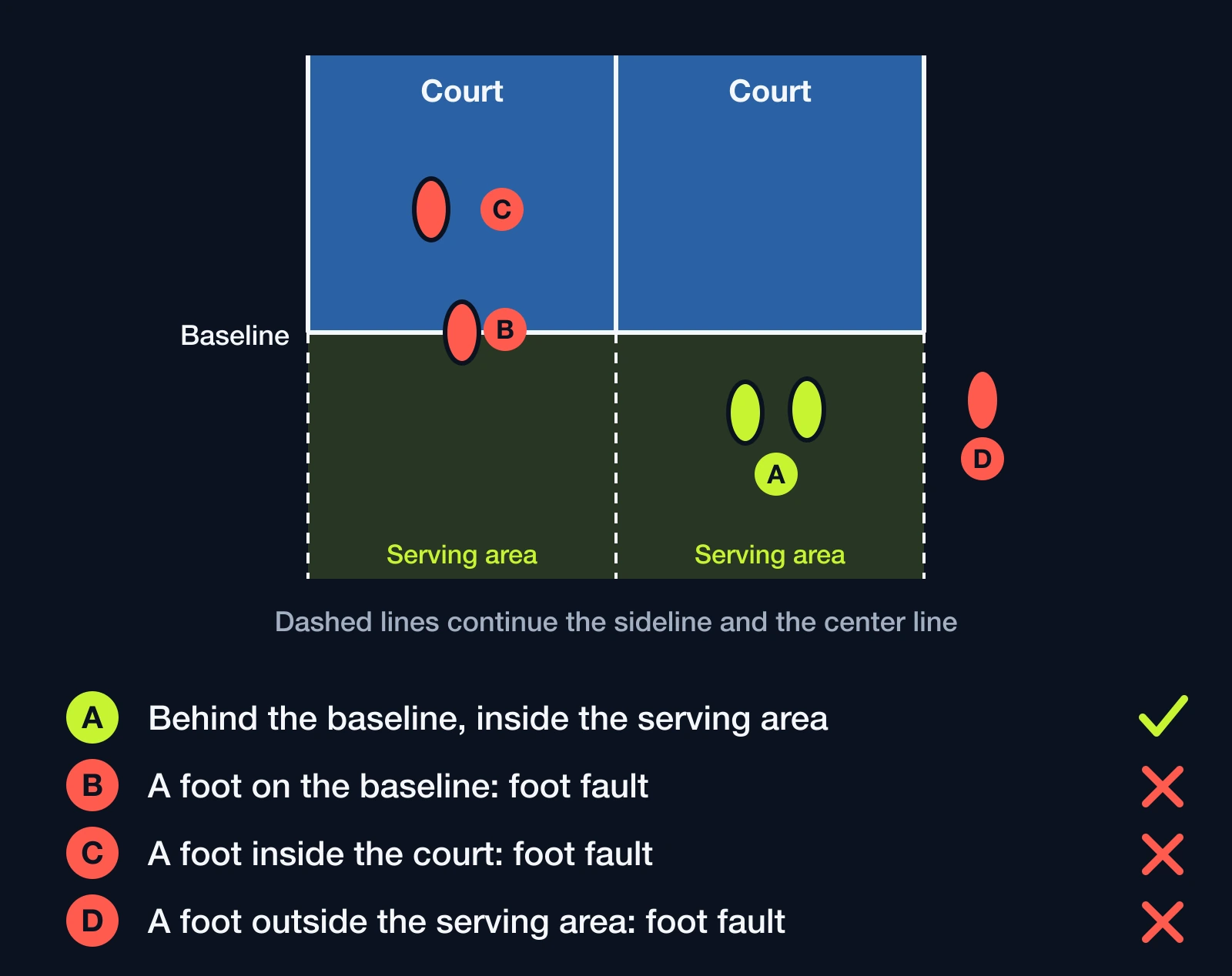
Stand behind the baseline, inside the imaginary lines that continue the sideline and the center line. Those lines mark your serving area (Rule 3.A.4.g in the 2026 USA Pickleball rulebook).
When you hit the ball:
- at least one foot has to be on the ground
- neither foot can touch the baseline or step inside the court
- neither foot can touch the ground outside your serving area
Touching the baseline is a foot fault, and so is jumping so that both feet are in the air. Stepping on the line is easy to do without noticing, so glance down before you hit.
Two legal ways to serve
You pick one each time, and you can switch between them whenever you like. Either one can be a forehand or a backhand.
The volley serve
You hit the ball out of the air with a forehand or backhand swing. Three things have to be true when the paddle meets the ball.
- The paddle is moving in an upward arc.
- The top of the paddle head isn't above the highest part of your wrist.
- The ball is no higher than your waist.
That's why an overhand serve isn't legal. The 2026 rulebook added the word "clearly" to all three tests, so aim for a motion that's obviously inside the limits instead of one that's borderline (Rule 7.C).
The drop serve
Let the ball fall from your hand, let it bounce, then hit it. You can drop it from any natural height. You can't throw it down or push it. It can bounce anywhere, any number of times, before you hit it.
The waist, wrist and arc rules don't apply to a drop serve. That makes it forgiving to learn (Rule 7.D).
Either way, release the ball with one hand or the paddle. Don't spin it with your hand or paddle before you hit it. Spin you put on the ball at contact is fine, and the receiver has to be able to see the release.
Where does the serve have to land?
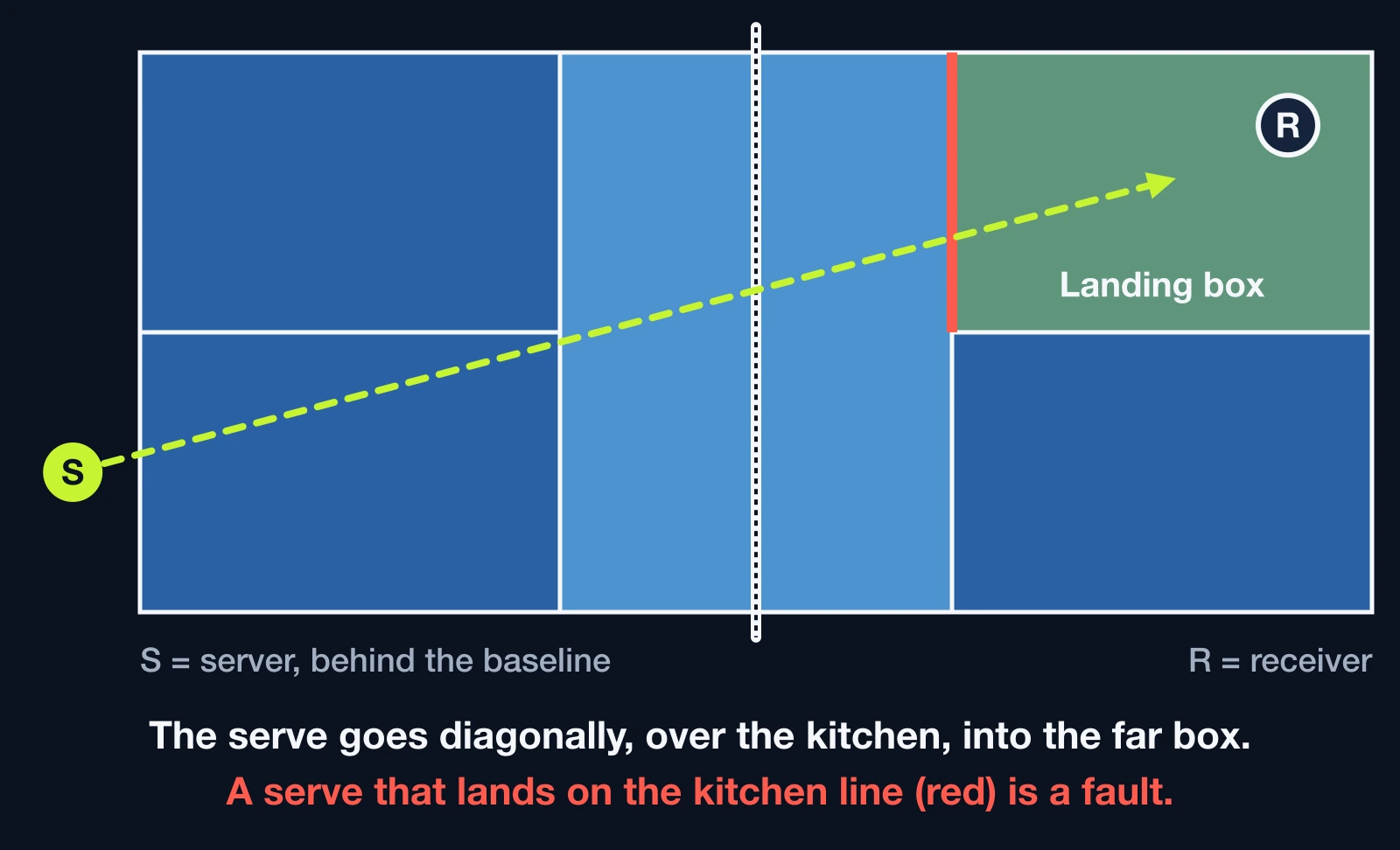
Aim diagonally, from your side to the service box on the opposite side. The ball has to clear the kitchen, which is 7 feet deep, and land in that box.
- The kitchen line counts as the kitchen. A serve that lands on it is a fault.
- The other lines around the box count as in: the baseline, the sideline and the center line.
- A serve that clips the net and still lands in the correct box is good. There are no lets on serves anymore (Rule 7.E). Some leagues and pro events set their own rules for net-clipping serves, so check yours.
A service box is 10 feet wide and 15 feet deep, measured to the outside edge of the lines.
What makes a serve a fault?
Any of these ends your serve:
- the ball lands outside the correct box, or in the kitchen or on its line
- a foot fault from the list above
- an illegal swing: too high, not an upward arc, or a drop that was thrown
- the ball hits you or your partner
- the ball hits a net post or any other permanent object, such as a fence, before it lands
- you hit the serve before the score is finished being called, or more than 10 seconds after (Rules 6.C and 6.D)
One more case works the other way. If your serve hits the receiver or their partner before it bounces, the fault is on them, and you win the rally.
A fault is final. Nobody gets a second serve. In singles the serve passes to the other player. In doubles it passes to your partner, or to the other team if you were the second server. The scoring guide shows how the serve moves around the court.
Serving questions players ask
Can you serve overhand in pickleball?
No. On a volley serve the paddle head can't be above your wrist when you hit, and the ball can't be above your waist. The only other legal serve is the drop serve, where the ball has to bounce before you hit it.
Can you bounce the ball before you serve?
Yes, that's the drop serve. Let the ball fall from your hand, let it bounce on the ground, then hit it. You just can't throw it down or push it to make it bounce.
Can you put spin on a serve?
Yes, with the paddle at the moment of contact. Spinning the ball by hand or paddle before the hit isn't allowed.
Which side do I serve from?
In singles, the right when your score is even and the left when it's odd. In doubles, a turn starts on the right, and you swap sides each time your team scores.
A serve drill that takes ten minutes
Put a towel or a water bottle deep in the service box, near the back corner. Hit ten serves at it from behind the baseline and count how many land in the box. Write the number down. Do it again next time and try to beat it.
Before each serve in a real game, run a quick three-point check: score called, feet behind the line, ball below the waist. A serve on the kitchen line is an easy one to give away, and the kitchen rules explain why it counts. Pickleball Game's referee calls serves that land in the kitchen or the wrong box, so you can see it happen against the computer.