Pickleball Injuries: The Common Ones and How to Lower Risk
Pickleball injuries are most often fractures and strains or sprains. In one study of US emergency-room records for 2013 to 2022, fractures were 32.7% of cases, strains and sprains 30.8%, and falls caused 65.5% of all injuries. These count injuries treated, not injury rates, so they show who gets hurt badly enough to go, not how risky the sport is.
This page is general information from the sources named, not medical advice. See a doctor about your own injury. The rules page covers the game itself.
Which injuries are most common?
Fractures and strains or sprains, together about 63 percent of cases. Yu and colleagues in the Orthopaedic Journal of Sports Medicine (2025) studied the federal injury database NEISS: 66,350 estimated injuries from 1,110 sampled emergency-department cases.
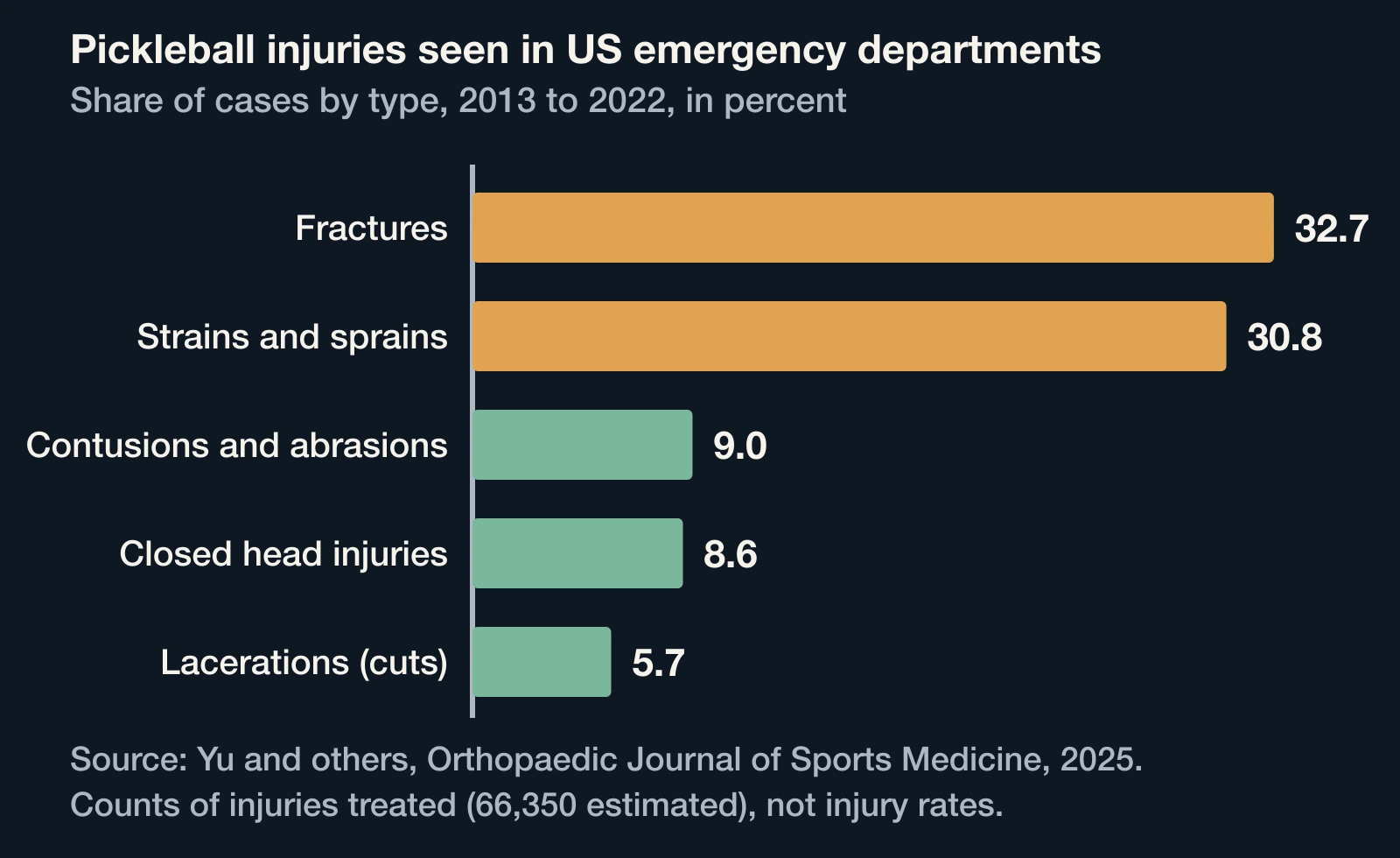
In words: fractures 32.7 percent, strains and sprains 30.8, contusions 9.0, closed head injuries 8.6, lacerations 5.7.
| Body part | What the sources found | Source |
|---|---|---|
| Wrist | The most injured body part, 12.7 percent of cases. The wrist was also the most common fracture site, 29.2 percent of fractures | Yu 2025 |
| Lower trunk (the paper's term, including hip and pelvis) | 12.1 percent of cases, and the most common site among patients admitted to hospital (42.2 percent of them) | Yu 2025 |
| Lower leg and ankle | Lower leg 11.7 percent of cases and ankle 6.1. Strains and sprains were most often in the lower leg (31 percent) or the ankle (14.7) | Yu 2025 |
| Head | 11.3 percent of cases | Yu 2025 |
| Knee | 7.0 percent of cases. AAOS OrthoInfo adds that playing too hard or too long can make arthritic knees swell | Yu 2025; OrthoInfo |
| Shoulder | 6.0 percent of cases | Yu 2025 |
| Eye | Case reports only (corneal abrasion, retinal tears). The authors say eye injuries are likely underreported and that no eyewear is mandated | Waisberg and others, Eye, 2023 |
| Elbow | OrthoInfo names "pickleball elbow" as an overuse injury. The paper gives no figure | OrthoInfo |
Who gets hurt: 61.1 percent of cases were aged 65 to 80, and women had 69.1 percent of the fractures. Falls were 71.5 percent of injuries at ages 65 to 80 and 96 percent at 81 and over. A second study, published by the American Osteopathic Academy of Orthopedics, used the same database with different totals (77,963 estimated injuries) and found fractures and sprains at 27 percent each. We haven't reconciled them, so we give both.
Is pickleball bad for your knees? None of these sources says it harms healthy knees. They give the 7.0 percent share and the arthritis warning above.
What these numbers can't tell you
The paper states its own limits:
- It counts only people who came to an emergency department, so milder injuries treated elsewhere are missing.
- It has no data on how often or how long people played, so it can't give an injury rate or compare pickleball with another sport.
- About 13 percent of injury mechanisms were coded "unspecified".
- It left out cardiac, heat and other non-musculoskeletal cases (11,629 estimated).
So "injuries are rising" means more emergency visits. The paper's national estimate went from 611 cases in 2013 to 13,690 in 2022.
How to lower your risk
These are the named sources' own lists:
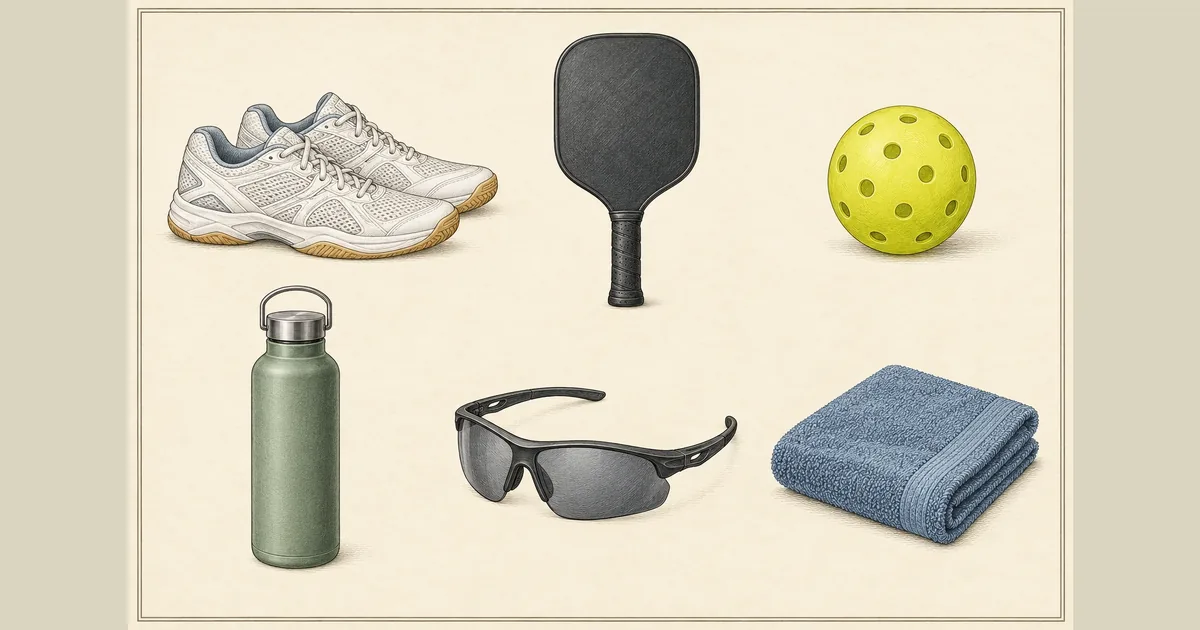
- AAOS OrthoInfo: take lessons, wear shoes designed for pickleball or tennis, warm up with light calisthenics and stretches and start with easy hitting, stay hydrated, and know your limits.
- Harvard Health Publishing (December 2023, reviewed by Howard E. LeWine, MD): lower-body strength exercises at least twice a week, a dynamic warm-up, and agility and balance work.
- Yu and colleagues: warm-up and balance training, a wrist guard that could help against high-energy wrist injuries, and safe, well-lit, well-maintained courts to prevent falls.
- Waisberg and colleagues: for eyes, ideally wrap-around protective eyewear with plastic lenses.
See our warm-up routine and what to wear. For the exercise side of the picture, see how many calories pickleball burns and what one small study found.
When to see a doctor
General information from named sources, not a diagnosis. If you are unsure, ask a doctor.
The UK's NHS page on sprains and strains (reviewed April 2024) says to get urgent advice if an injury is very painful or getting worse, the swelling or bruising is large or growing, you can't put weight on it or walk more than a few steps, it is very stiff or hard to move, or it isn't better after self-care. It says to go to emergency care if you heard a crack at the time, the body part has changed shape or points at an odd angle, it is numb, tingling or has pins and needles, or the skin has turned blue or gray or feels cold.
The CDC's HEADS UP page (updated September 2025) says to call 911 or go to the nearest emergency department after a bump, blow or jolt to the head if you notice any of these:
- seizures or convulsions
- not recognizing people or places
- repeated nausea or vomiting
- unusual behavior, increased confusion, restlessness or agitation
- loss of consciousness with increasing drowsiness, or being unable to wake up or stay awake
- slurred speech, weakness, numbness or decreased coordination
- a headache that gets worse and does not go away
- one pupil larger than the other, or double vision
Before your next game, check two things: your shoes are made for court sports, and you have done a short warm-up. New to the game? Try the first-week plan or how to play pickleball. You can also play a free game to learn the rules without a court.
Sources
- CDC, HEADS UP signs and symptoms: concussion signs.
- NHS, sprains and strains (reviewed April 2024): when to seek urgent advice.
- OrthoInfo, pickleball injury prevention tips: prevention advice from orthopedic surgeons.
- Harvard Health, stay safe playing pickleball: safety advice.
- Yu and colleagues, Orthopaedic Journal of Sports Medicine (2025): the NEISS emergency-department study, injury types and ages.
- American Osteopathic Academy of Orthopedics, rising orthopedic injuries in pickleball: a second study of the same database.
- Waisberg and colleagues, Eye: pickleball eye injuries.